What Is the Usual Price Per Kilo of Roasting Beef
Today, I'd like you to meat (ha!) Tom. Tom's been a meat cutter for 30+ years and REALLY knows his way around a steak. When it comes to cheap meat, Tom has the insider's scoop.
I sat down with him recently as part of my series on how to buy cheap foods and asked him everything– how to get the best prices on meat, how sales cycles work, and exactly what to look for to get the best deal.
So what counts as cheap meat?
It really depends on where you live. I have a strict grocery budget to keep, so I don't buy anything other than cheap meat. I stock up on chicken when it's less than $1 a pound (for whole chickens) and on sale for $1.99 a pound (for chicken breasts). For pork chops, I'll buy when they're $0.99 a pound. And I'll only grab beef roasts when I find them under $4 a pound.
But those are just my local Maine prices. Food prices vary wildly based on state, city, and available stores. The US Bureau of Labor Statistics keeps tabs on the national average price of most meats, which helps us get a ballpark figure of what's realistic. (Here's a hint: $0.99/lb isn't realistic for any kind of beef product.) Here's a sampling of the national average prices for cuts of meat in December 2021:
- Whole chicken- $1.60 per pound
- Chicken breasts- $3.73 per pound
- Pork chops- $4.02 per pound
- Ground beef- $5.17 per pound
- Beef roast- $6.92 per pound
- Bacon- $7.21 per pound
- Sirloin steak- $11.02 per pound
Remember, those are AVERAGES. You aren't here to pay average prices. You're here to find CHEAP prices. I know I am, because my wallet is crying looking at some of these prices. So here are Tom's best tips, tricks, and hacks to get the best bang for your buck on meat, no matter where you live.

Shop the front sales on the flyer
Stores that have weekly flyers operate on a "loss leader" strategy, where they sell certain items at a loss to themselves in order to get you in the door. This is how stores like Kroger, Albertson's, and Piggly Wiggly operate. The loss leader meat sales are usually the biggest, and the best meat deals are always advertised on the front cover of your weekly flyer.
Loss leader sales are routinely sold at 50% or less of their normal price, so they're a great place to look when you need cheap meat. Unfortunately, you can't expect stores to have sales cycles at perfectly regular intervals. They don't want to be predictable, in the hopes that you'll buy full-price meat once in a while.
Thankfully, the same meat staples– things like pork butts, chicken breasts, pork chops, and chuck roasts especially– tend to go on sale roughly once every month or six weeks. That way, you can plan to stock up enough of any meat to last you til the next sale.
Stock up on holidays
If normal meat sales are good, holiday meat sales are FANTASTIC. In fact, you'll want to make room in your main freezer right before a holiday for this purpose. Meat is at its most rock-bottom prices when it goes on sale around the appropriate holiday. (We actually need a chest freezer in addition to our main freezer because I store tons of freezer meals in addition to all our cheap meat.)
I suggest buying at least three packages of on-sale holiday meat, regardless of whether you'll use it that week. That way, you've always got a small stockpile of most kinds of meat, all bought at the cheapest prices.
Here's what time of year Tom says to stock up on each kind of meat when they go on super sale:
- Turkey- Thanksgiving, Christmas
- Whole hams- Christmas, Easter
- Ribs- Christmas, New Year's
- Ground beef- Memorial Day, 4th of July, and Labor Day
- Corned beef- St. Patrick's Day
If you have other holidays heavily celebrated in your neighborhood, the markets near you might put their associated meats on sale a week or two before the big day. Keep an eye out or ask the meat cutter!
Try a different quality grade
Did you know meat gets graded on different levels of quality? Inspectors give meat a grade from Prime at the top, then Choice, then Select at the bottom (well, at least the bottom of what they sell in grocery stores). The higher grades are the most tender, flavorful meat, and the lower ones are leaner and less juicy. If you're used to buying only top quality Prime meat, try buying Choice or Select cuts of steak and spending the time slow cooking or marinating them to improve their flavor and texture.
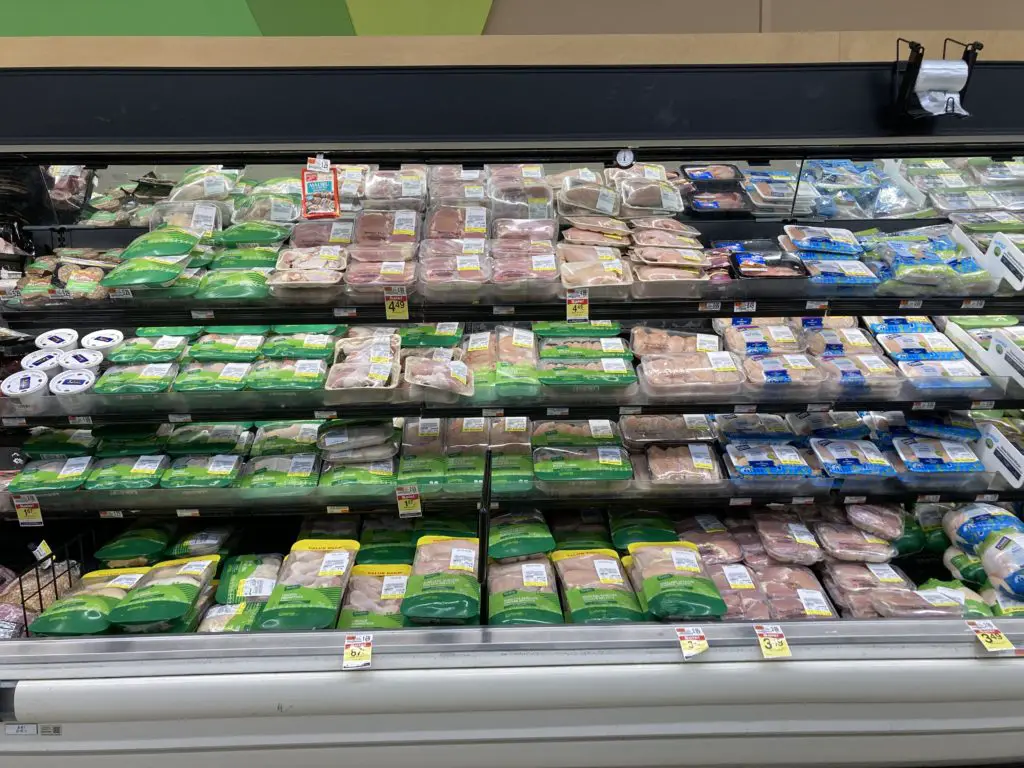
Focus on the cheapest meat per pound
No matter where you live, the same kinds of meat are generally cheaper everywhere. The cheapest meats per pound are those that require more preparation (bone-in or skin-on), or take longer to cook (big roasts or whole birds). In addition, chicken meat is generally cheapest, followed by turkey, pork, and beef. This makes sense when you consider how much a chicken eats compared to a cow.
Here's some of the cheapest meat per pound, from lowest to highest:
- Whole chickens
- Bone-in, skin-on chicken thighs or leg quarters
- Whole turkeys
- Bone-in pork chops
- Whole hams
- Pork roasts
- Ground pork
- Ground beef (higher fat content is cheaper, 80/20 for example)
Buy the family packs of cheap meat
Even if you're only cooking for one, buying meat in bulk is almost always cheaper than the single-serving packs. Some stores only do sales on certain size packs too, so you'll miss out on good deals by only buying the little packs.
If you can't eat all that meat in one week, seal up the leftovers in freezer bags for another time.
Keep a price book
As I describe in my post on price books, you'll never know if something is a REAL sale or a marketing gimmick if you don't know the usual prices. And since you can't possibly remember all the usual prices to every item in the store, you need a price book to help you keep track.
Keep a list of all the usual prices on your family's favorite cuts of meat, and note whenever you see them on sale. This will help you time when to stock up, and when to ignore the $3.99/lb sale since a 2 for $5 will likely happen next week.
Finally, a price book can also help you understand which stores in your area have the cheapest meat. No store has the best deal on every product. If you can find which stores have the best meat prices (even if they don't make sense for full shopping trips), you can save big.
Get the markdowns

In order to not throw expired food away (and losing tons of money), meat cutters do all they can to sell meat before it hits its sell-by date. This means a day or two before it's set to expire, they'll slap discount stickers on these packs or move them to a special discount section of the case.
Each store is different, so don't be shy! Ask a meat clerk or manager what days and times they do meat markdowns, and ask where they put these packs. Employees are often happy to help, because their departments don't want food to go to waste.
Once you've grabbed a few packs of almost-out-of-code meat, make sure you cook it that day or throw it in your freezer when you get home. Freezing stops the meat from going bad. When you're ready to cook or grill, you can take it out and use it immediately after it thaws.
Pro-tip: when freezing meat, make sure you label the packaging with the date you bought it.
Get a chest freezer
Have you noticed a trend?? Freeze this meat, freeze that meat, freeze, freeze, freeze. There's no way I could successfully feed my family of four for 42% less than the average thrifty American without my chest freezer.
We have this 5 cu. Ft. Igloo chest freezer, and it's been plenty big for storing our family's meat stockpile, freezer meals, and my frozen garden surplus. Amazon also has this 5 cu. Ft. Arctic King chest freezer which is slightly cheaper, but I haven't tested it myself.
Of course, before you go and buy a brand new chest freezer, you should always check Craigslist, your local Buy Nothing group on Facebook, apps like NextDoor, or the Facebook Marketplace for a good secondhand chest freezer. You can also tell friends you're looking and see if they have any leads. We got our freezer second hand as a gift from a friend. (Best baby shower gift ever!)
Cheap Meat Cooking Strategies
Cook "less meat" meals
Ok, carnivores. I know going totally meatless isn't even an option for many of you (or some of the hungry guys in your family). But that doesn't mean you're destined to spend hundreds of dollars a month just on meat.
Try using meat as one ingredient among many, instead of the star of the show. Soups, stews, chilis, casseroles, and stir frys are great at using smaller portions of meat. Considering the average human only needs between 5 and 6 ½ oz of protein a day, you're not compromising your health by eating smaller cuts of meat.
Using less meat is also a great way to stretch what meat you have if you need to make dirt cheap meals for your large family or gathering.
Cook low and slow
If you buy larger, tougher cuts of meat– like top round roasts– you'll need to adjust the way you cook it. Big, thick slabs can't be grilled or stir fried, since the fast, intense heat will only cook the outside, leaving most of it raw.
Instead, the solution is to cook in a crock pot, Instant Pot, or a roasting pan in the oven for a few hours on lower heat. This slowly cooks the meat and makes it flavorful and tender.
Eat the feet
I admit, I don't actually know any recipes that use hooves or chicken feet. BUT. There are plenty of other animal parts that aren't in the Standard American Diet of chicken breasts and steak. These other cuts and portions are still nutritious and delicious (if cooked right). Things like…
- Gizzards
- Neck
- Tongue
- Marrow bones
- Organ meat (kidneys, liver, heart)
- Tail
- Ham hocks
…are all edible and many are sold at your typical grocery stores. However, you'll likely find better prices on these cuts at ethnic markets (think Asian, hispanic, Halal, etc). Some of these cuts are more common in the regional cuisine these shops are catering to, so they discount the prices to bring in their target customers.
There you have it! All you could ever want to know about cheap meat. Like what you read? Sign up for my newsletter below and be one of the first to read the next money-saving article I post.
You may also like:
- Cheap Breakfast Ideas Under $1.05 (Yeah, We Did the Math)
- How to Save Money on Groceries Without Coupons: The Ultimate Guide
- 40+ Dirt Cheap Meals for Large Families to Save Money
Source: https://homegrownhillary.com/cheap-meat/
0 Response to "What Is the Usual Price Per Kilo of Roasting Beef"
Post a Comment